Utah does not require living wills to be notarized, but notarization is accepted as an alternative to two witnesses and offers stronger legal protection. This guide covers the requirements, costs, and process.
No, a living will does not need to be notarized to be legally valid in Utah, but notarization is strongly recommended and serves as a legally recognized alternative to having two witnesses. Under Utah's Advance Health Care Directive Act, you can choose either notarization or two adult witnesses to execute your living will. This guide explains why notarization is the better choice and walks you through the process step by step.
Key Takeaways
- Utah living wills require either two adult witnesses OR notarization, not both
- Notarization provides identity verification that witness signatures do not
- Hospitals and healthcare providers accept notarized directives more readily
- The notarization fee is $10 per act at NotaryLTD
- A living will is one component of a broader healthcare directive in Utah
- Mobile and RON notarization options are available for convenience
Need your living will notarized?
NotaryLTD provides living will and healthcare directive notarization at $10 per act. Mobile notary available throughout Park City, SLC, and Summit County.
Book NowLiving Will Legal Requirements in Utah
Utah governs living wills under the Advance Health Care Directive Act, found in Utah Code Title 75, Chapter 2a. A living will is the portion of a healthcare directive that specifies your preferences for medical treatment if you become incapacitated and unable to communicate. It typically addresses questions about life-sustaining treatment, artificial nutrition and hydration, resuscitation, and pain management.

Under Utah Code 75-2a-107, the execution requirements for a living will are the same as for any healthcare directive: the declarant must sign the document and have it either witnessed by two qualified adults or acknowledged before a notary public. These two methods are alternatives, meaning you only need one or the other. Choosing notarization means you do not need witnesses, and vice versa.
The witness requirements come with specific qualifications. The two witnesses must be adults, they cannot be the declarant's healthcare provider or an employee of the healthcare provider, and they should not be individuals who would benefit financially from the declarant's death. These restrictions exist to prevent conflicts of interest, but finding qualified witnesses can be inconvenient, particularly for individuals who live alone or are in healthcare facilities.
Notarization eliminates the need to find qualified witnesses. The notary serves as the independent third party who verifies your identity and observes your signature. The notary's official seal and journal entry provide a level of credibility and verifiability that witness signatures alone cannot match.
Notarization vs. Witnesses: Which Is Better?
While both methods produce a legally valid living will in Utah, notarization offers clear advantages that make it the preferred choice for most estate planning professionals.
Identity verification is the most significant advantage. A notary examines your government-issued photo ID and confirms that you are who you claim to be. Witnesses merely observe you sign and attest that they saw you do so. If the living will is ever challenged, the notary's identity verification provides concrete, documented proof of who signed the document. Witnesses can only testify from memory, which may fade or become unreliable over time.
Permanence of the record matters when years or decades pass between execution and use. A notary's journal entry, which is mandatory under SB 139 starting May 6, 2026, creates an independent, permanent record of the notarization. If the original living will is damaged, lost, or its authenticity is questioned, the notary's journal can confirm when and where the notarization occurred. Witnesses may have moved, forgotten the details, or even passed away by the time the living will needs to be enforced.
Professional credibility carries weight with healthcare providers. When a hospital receives a living will with a notary seal, the staff recognizes it as a professionally executed legal document. A witnessed-only document may prompt additional questions about whether the witnesses were qualified and whether the execution was proper, potentially causing delays during a medical emergency.
Fewer logistical hurdles make notarization more convenient. Finding two adults who meet the witness qualifications, are available at the same time and place, and are willing to participate can be challenging. With notarization, you only need to visit a notary or schedule a mobile notary appointment. At NotaryLTD, we are available seven days a week from 9 AM to 9 PM, making it easy to fit notarization into your schedule.
The cost of notarization is minimal. At $10 per notarial act at NotaryLTD, there is virtually no financial reason to choose the witness route over notarization. The protection and convenience notarization provides far exceeds its modest cost. View our complete pricing page for all fee details.
What Your Living Will Should Cover
A well-prepared living will addresses specific medical scenarios and treatment preferences. While NotaryLTD notarizes living wills but does not provide legal advice about their contents, understanding what a living will typically covers helps you prepare for your notarization appointment.
Life-sustaining treatment preferences are the core of most living wills. You may specify whether you want mechanical ventilation, dialysis, or other life-prolonging treatments if you have a terminal condition or are in a persistent vegetative state. You can choose to accept all available treatments, refuse specific treatments, or refuse all life-sustaining treatment.
Artificial nutrition and hydration preferences address whether you want to receive food and water through tubes or IV lines if you can no longer eat or drink normally. This is a separate decision from other life-sustaining treatments and should be addressed specifically in your living will.
Pain management preferences indicate your wishes regarding comfort care, including the use of pain medication even if it might hasten death. Most living wills include a provision ensuring that comfort care continues regardless of other treatment decisions.
Organ donation preferences can be included in your living will, though they are also typically addressed through a separate donor registry or designation on your driver's license. Including your organ donation wishes in your living will provides additional documentation of your intentions.
Utah Code 75-2a-117 provides a statutory form for healthcare directives that includes living will provisions. This form is a solid starting point, but many attorneys customize it to address each client's specific medical history, religious beliefs, and personal values. Whichever form you use, the notarization requirements are the same.
The Living Will Notarization Process
Getting your living will notarized is a quick and straightforward process. Here is how it works at NotaryLTD.
Prepare your living will document in advance. Make sure all your treatment preferences are filled in and the document is complete. Do not sign it before your appointment. The notary must witness your signature for the acknowledgment to be valid.
Bring a valid government-issued photo ID. A state driver's license, state ID card, or U.S. passport is acceptable. Utah Driving Privilege Cards are not accepted for notarization. Your ID must be current and unexpired.
At the appointment, the notary will verify your identity by examining your ID. The notary will confirm that you understand what you are signing and that you are doing so voluntarily. You will then sign the living will in the notary's presence. The notary will apply their official seal and complete the notarial certificate.
The notary will record the transaction in their journal. Under SB 139, effective May 6, 2026, this journal entry is mandatory and includes the date, time, type of document, your name, the ID presented, and the fee charged. At NotaryLTD, Commission #742886, we have maintained comprehensive journals for over 30 years.
The total time for the appointment is typically 10 to 15 minutes. The fee is $10 per notarial act. For mobile notarizations, add $0.70 per mile for travel from our Park City location. We serve the entire Salt Lake, Summit, and Wasatch County region.
Remote Online Notarization for Living Wills
If you prefer to handle your living will notarization from home, Remote Online Notarization (RON) is available in Utah for healthcare directive documents, including living wills.
A RON session allows you to appear before the notary via secure video connection from anywhere with internet access. The RON platform handles identity verification through knowledge-based authentication questions and credential analysis of your photo ID. You sign the document electronically, and the notary applies a digital seal.
One significant advantage of RON for living will notarization is the mandatory audiovisual recording. The recording captures your demeanor, mental state, and voluntary participation throughout the session. If your living will is ever challenged on grounds of incapacity or coercion, the recording provides powerful evidence to defend the document's validity.
NotaryLTD charges $25 per RON session. The session typically takes 15 to 20 minutes. We provide technical support throughout the process and ensure that every step meets Utah's legal requirements. This option is particularly convenient for individuals who travel frequently, live in remote areas, or have mobility limitations that make in-person visits difficult.
Living Will vs. Healthcare Directive in Utah
Many people use the terms "living will" and "healthcare directive" interchangeably, but in Utah law, they refer to different things. Understanding the distinction helps you ensure that all your medical wishes are properly documented and notarized.
A healthcare directive is the comprehensive document authorized by Utah Code Title 75, Chapter 2a. It can include treatment instructions (the living will component), appointment of a healthcare agent (someone to make medical decisions for you), and organ donation preferences. It is a single document that covers all your advance planning needs.
A living will, in the traditional sense, refers specifically to the treatment instruction component. It tells healthcare providers what treatments you do or do not want under specific circumstances. It does not appoint anyone to make decisions for you; it speaks for you directly.
Most estate planning attorneys recommend creating a comprehensive healthcare directive that includes both the living will instructions and a healthcare agent appointment. This ensures that you have both written instructions and a designated person to interpret and advocate for your wishes in situations your written instructions may not specifically address.
Whether you have a standalone living will or a comprehensive healthcare directive, the notarization requirements and process are identical. NotaryLTD can notarize either type of document. For more information about the broader healthcare directive, see our guide on whether a healthcare directive needs to be notarized in Utah.
When and How to Update Your Living Will
A living will should be reviewed and potentially updated periodically. Life changes may affect your medical preferences, and medical advances may change the treatment options available to you. Here are situations that should prompt a review.
A significant change in your health status, such as a new diagnosis of a chronic or terminal condition, may cause you to reconsider your treatment preferences. What seemed right when you were healthy may feel different when facing a specific medical reality.
Marriage, divorce, or the death of a spouse may change who you want as your healthcare agent. If your healthcare directive includes an agent appointment, you will want to update it to name a new agent or successor agents.
Moving to a new state may require updating your directive to comply with the new state's laws. While most states recognize validly executed directives from other states, having a directive that complies with your current state's specific requirements provides the strongest legal protection.
Every few years, even without a triggering event, it is a good practice to review your living will and confirm that it still reflects your wishes. Medical technology and treatment options evolve, and your preferences may evolve with them.
When you update your living will, the new version must be properly executed, either witnessed or notarized, just like the original. The new document should clearly state that it revokes all prior directives. Distribute the updated version to your healthcare agent, physicians, and hospitals, and retrieve and destroy any copies of the old version to prevent confusion. For professional notarization of your updated living will, contact NotaryLTD.
Get your living will notarized today.
NotaryLTD: $10 per act, mobile notary available, 30+ years of experience. Serving Park City and all of Salt Lake, Summit, and Wasatch counties.
Book NowFrequently Asked Questions
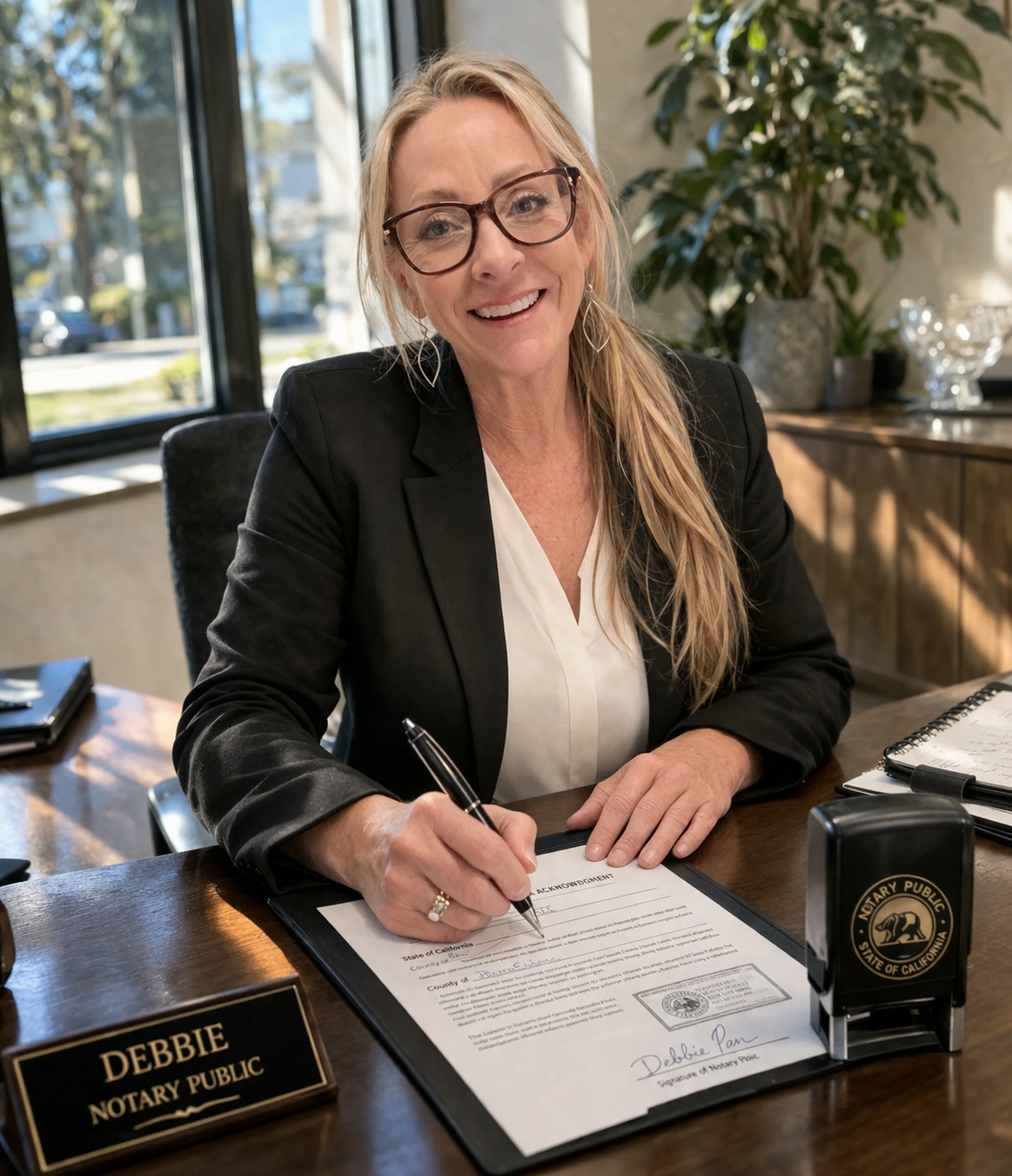
About the Author
Deborah Cuha
Licensed Utah Notary Public (Commission #742886) with 30+ years of experience. NNA Certified Loan Signing Agent and Certified Remote Signing Agent. Based in Park City, serving Summit, Wasatch, and Salt Lake counties.
Read Full Bio →