Utah does not require healthcare directives to be notarized, but notarization provides significant legal protection and is accepted in place of witness signatures. This guide explains the requirements and benefits.
Utah does not strictly require a healthcare directive (also called an advance healthcare directive) to be notarized. Under Utah Code 75-2a-107, a healthcare directive is valid if it is signed by the declarant and either witnessed by two adults or notarized by a notary public. However, choosing notarization over witnesses offers substantial practical advantages that protect you and your family during medical emergencies. This comprehensive guide explains the legal requirements, benefits of notarization, and how to get your healthcare directive properly executed in Utah.
Key Takeaways
- Utah healthcare directives require either two witnesses OR notarization (not both)
- Notarization provides stronger legal protection than witness signatures alone
- The notary fee is $10 per act at NotaryLTD, a small price for critical protection
- Healthcare providers are more likely to accept a notarized directive without question
- RON is available for healthcare directive notarization at $25 per session
- Under SB 139, effective May 6, 2026, notary journals are mandatory for all acts
Need your healthcare directive notarized?
NotaryLTD handles healthcare directive notarizations daily. $10 per act, available 7 days a week in Park City and surrounding areas. Call 435-565-1333.
Book NowUtah Healthcare Directive Law Explained
Utah's Advance Health Care Directive Act, codified in Utah Code Title 75, Chapter 2a, governs healthcare directives in the state. The law provides a framework for individuals to document their healthcare wishes in advance, ensuring that their preferences are followed if they become unable to communicate medical decisions for themselves.

Under Utah Code 75-2a-107, a healthcare directive is valid if the declarant signs it and either has it witnessed by two adults or has it acknowledged before a notary public. The law treats these two methods as alternatives, meaning you can choose one or the other. You do not need both witnesses and notarization, though having both certainly does not hurt.
If you choose the witness route, the two witnesses must be adults who are not the declarant's healthcare provider, not employees of the healthcare provider, and not individuals who would benefit financially from the declarant's death. These restrictions aim to prevent conflicts of interest. However, witness-based execution has practical weaknesses that notarization avoids.
The healthcare directive itself can include several components: instructions about specific medical treatments you do or do not want, appointment of a healthcare agent (someone authorized to make medical decisions on your behalf), and preferences regarding organ donation. All of these components are covered by the single execution requirement, whether by witnesses or notarization.
Why You Should Notarize Your Healthcare Directive
Even though Utah law offers the witness alternative, there are compelling reasons to choose notarization for your healthcare directive. The additional credibility and protection that notarization provides can make a critical difference during a medical emergency.
Hospital acceptance is faster and more reliable with a notarized directive. When a family member presents a healthcare directive at a hospital emergency room, the medical staff must quickly assess whether the document is valid before following its instructions. A notarized directive with an official seal is immediately recognizable as a properly executed legal document. A witnessed directive may raise questions about whether the witnesses were qualified or whether the signatures are authentic, potentially causing delays at the worst possible time.
Identity verification through notarization confirms that the person who signed the directive is who they claimed to be. Witnesses do not verify identity through government-issued photo ID. They simply sign the document stating they observed the declarant's signature. A notary examines the declarant's ID, confirms the match, and creates a record of the verification. This provides a much higher level of assurance that the directive is authentic.
Protection against challenges is stronger with notarization. If a family member disputes the healthcare directive, arguing that the declarant was coerced or lacked capacity, the notary's seal and journal entry provide independent evidence of the execution circumstances. The notary can testify about the declarant's apparent mental state and willingness at the time of signing. Witnesses can provide similar testimony, but they are often family members or friends who may be seen as biased.
Portability across state lines is enhanced by notarization. If you travel to another state and need emergency medical care, the receiving hospital must assess whether your Utah healthcare directive is valid under their state's laws. Most states recognize notarized documents more readily than witnessed-only documents. A notarized directive is more likely to be honored by out-of-state healthcare providers.
The cost difference is minimal. At NotaryLTD, the fee is $10 per notarial act. For a document that may determine your medical care during a life-threatening emergency, this is a trivial expense. Visit our pricing page for complete fee information, or learn more at our estate planning notary service page.
Healthcare Directive vs. Living Will: Understanding the Difference
In Utah, the terms "healthcare directive" and "living will" are often used interchangeably, but there are technical differences worth understanding. A healthcare directive under Utah law is a broader document that can include both instructions about your medical treatment preferences and the appointment of a healthcare agent.
A living will, in the traditional sense, refers specifically to the portion of the directive that outlines your treatment preferences, such as whether you want life-sustaining treatment, artificial nutrition, or resuscitation under certain circumstances. For more specific information about living wills, see our detailed guide on whether a living will needs to be notarized in Utah.
The appointment of a healthcare agent (also called a healthcare proxy or medical power of attorney) is the other component. This designates a specific person to make medical decisions on your behalf when you cannot. Many people combine both components into a single healthcare directive document.
Regardless of which components your document includes, the execution requirements under Utah Code 75-2a-107 are the same: signature by the declarant plus either two witnesses or notarization. NotaryLTD can notarize any healthcare directive, whether it contains treatment instructions only, an agent appointment only, or both.
The Notarization Process for Healthcare Directives
Getting your healthcare directive notarized at NotaryLTD is straightforward and can typically be completed in 15 minutes or less. Here is what to expect.
Bring your completed healthcare directive. The document should be fully filled out with your treatment preferences, healthcare agent information, and any other instructions you want to include. Do not sign the document before arriving. You must sign in the notary's presence.
Bring a valid government-issued photo ID. A state driver's license, state ID card, or U.S. passport is acceptable. Utah Driving Privilege Cards are not accepted. The ID must be current and not expired.
The notary will verify your identity, ask if you understand the document and are signing voluntarily, and then observe you sign. The notary will apply their official seal and complete the notarial certificate. The notary will record the transaction in their journal, which becomes a permanent record of the notarization.
If you do not have a healthcare directive document prepared, your attorney can provide one, or you can use the statutory form provided in Utah Code 75-2a-117. The statutory form is a solid starting point, but many attorneys recommend customizing it to address your specific medical history and preferences. Note that NotaryLTD notarizes documents but does not prepare them or provide legal advice about their content.
For mobile notarization, we travel to your location in Park City, Salt Lake City, and throughout Summit and Wasatch counties. The travel fee is $0.70 per mile. This is particularly convenient for individuals who are preparing healthcare directives while dealing with health challenges that make travel difficult.
Mobile notary for healthcare directives
We come to your home, hospital, or care facility. Available Monday through Sunday, 9 AM to 9 PM. $10 per act plus $0.70/mile travel.
Book NowRON for Healthcare Directive Notarization
Remote Online Notarization is available for healthcare directive notarization in Utah. A RON session allows you to get your directive notarized from home using a secure video connection. This option is convenient for individuals who cannot easily travel or who prefer the efficiency of a remote session.
During the RON session, you will go through multi-factor identity verification, including knowledge-based authentication questions and credential analysis of your photo ID. The notary will observe you sign the document electronically, and the entire session is recorded as required by Utah law. The recording provides additional evidence of your mental state and voluntary participation at the time of signing.
RON is particularly valuable for healthcare directive signings because the audiovisual recording creates a permanent record of your capacity and willingness at the time of execution. If your directive is ever challenged on grounds of incapacity or coercion, the recording serves as powerful evidence. NotaryLTD charges $25 per RON session.
When to Prepare and Notarize Your Healthcare Directive
The best time to prepare and notarize a healthcare directive is while you are healthy, mentally competent, and not facing an immediate medical crisis. Waiting until a health emergency arises often means the document is prepared under pressure, with less time for careful consideration of your wishes.
Every adult over 18 should have a healthcare directive, regardless of their current health status. Accidents and sudden illnesses can happen to anyone at any age. Having a notarized directive in place ensures that your medical preferences are documented and legally enforceable from the moment you sign.
You should update your healthcare directive after major life events such as marriage, divorce, the birth of a child, a significant change in health status, or if you want to change your healthcare agent. Each new version should be properly executed (signed and notarized) and distributed to your healthcare agent, your primary physician, and any hospitals where you regularly receive care.
If you already have a witnessed healthcare directive, you may want to consider having a new version notarized for the additional protections described above. The old directive should be revoked by clearly stating in the new document that it supersedes all prior directives. Utah law allows you to revoke a healthcare directive at any time as long as you have the capacity to do so.
Distributing Your Notarized Healthcare Directive
After notarization, you need to ensure that the people who need your directive can access it when the time comes. A notarized directive locked in a safe that no one can open during an emergency is of no use.
Give a copy to your healthcare agent. This is the person you have designated to make medical decisions on your behalf. They need to know they have been appointed and should have a copy readily available. Discuss your wishes with them in detail so they understand not just what the document says, but the reasoning behind your choices.
Provide a copy to your primary care physician and any specialists who provide your regular care. Most medical offices will scan the directive into your medical records, making it available to all providers within that healthcare system.
Give a copy to any hospital where you regularly receive care. Many hospitals have advance directive registries where your document is stored electronically and accessible to staff in an emergency.
Keep the original in a known, accessible location. Inform your healthcare agent and at least one other trusted person of its location. Some people keep the original in a fireproof safe at home and provide the combination or key to their healthcare agent. Others keep it with their attorney. Whatever method you choose, make sure someone can access it quickly if needed.
Consider uploading a digital copy to Utah's Advance Health Care Directive Registry, if available in your area. Digital registries allow healthcare providers to access your directive electronically, which is particularly useful in emergency situations where time is critical. For more information about healthcare directives and related estate planning documents, contact NotaryLTD or visit our FAQ page.
Protect your medical wishes today.
NotaryLTD provides healthcare directive notarization at $10 per act. 30+ years of experience, Commission #742886. Available 7 days a week.
Book NowFrequently Asked Questions
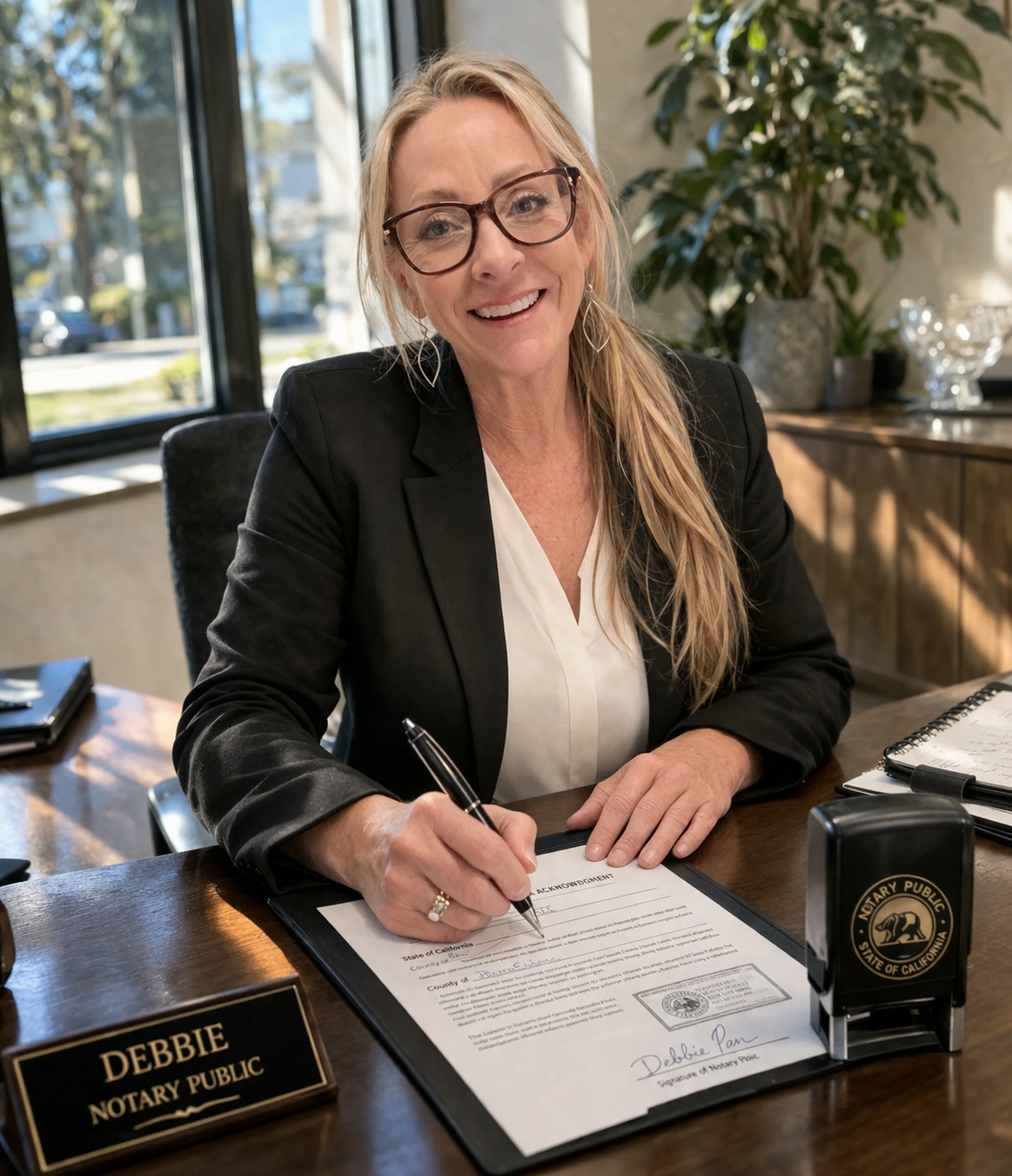
About the Author
Deborah Cuha
Licensed Utah Notary Public (Commission #742886) with 30+ years of experience. NNA Certified Loan Signing Agent and Certified Remote Signing Agent. Based in Park City, serving Summit, Wasatch, and Salt Lake counties.
Read Full Bio →