Yes, a Utah notary can notarize a document that will be used in California, but the notarization must follow Utah law, and the signer should confirm that California will accept it.
A Utah-commissioned notary can notarize documents intended for use in any state, including California. The critical distinction is that the notarization is performed under Utah law, regardless of where the document will ultimately be filed or used.
Key Takeaways
- A Utah notary can notarize any document regardless of where it will be used
- The notarization follows Utah law and procedures, not the destination state's law
- California has specific certificate wording requirements that must be met
- California county recorders may reject documents without California-compliant certificates
- Real estate documents for California recording require extra attention to certificate format
Need a document notarized for California use?
NotaryLTD handles cross-state notarizations daily. We ensure your documents meet both Utah law and the receiving state's formatting requirements.
Book NowThe Basic Rule of Cross-State Notarization
The fundamental principle governing cross-state notarization is straightforward: a notary performs notarial acts under the authority of the state that commissioned them, regardless of the document's origin or destination. A Utah notary performs all notarizations under Utah law because their commission and authority come from the state of Utah. The document being notarized can originate from any state, any country, or any entity.

This principle applies to every type of document. A California real estate contract, a New York business agreement, a Florida power of attorney, or a Texas affidavit can all be notarized by a Utah notary. The notary applies Utah identification requirements, Utah notarial certificate standards, and Utah journal requirements to the notarization. The signer's location and the document's destination do not change the notary's obligations under Utah law.
The legal basis for this arrangement comes from the principle of comity, which is the mutual recognition that states extend to each other's official acts. Under the Full Faith and Credit Clause of the U.S. Constitution and the general principle of interstate comity, states recognize notarial acts performed in other states. This means a document notarized by a Utah notary is generally accepted throughout the United States.
However, "generally accepted" is not the same as "universally accepted without question." Some states, including California, have specific certificate wording requirements and formatting rules that can create complications when a document notarized under another state's law is presented for recording or filing. Understanding these requirements before the notarization prevents rejection and delays.
California's Specific Certificate Requirements
California is one of the strictest states when it comes to notarial certificate formatting. California Civil Code Section 1189 prescribes specific acknowledgment certificate wording that differs from Utah's standard certificate language. While California must accept notarizations performed under other states' laws, California county recorders have been known to reject documents when the notarial certificate does not conform to their expected format.
The California acknowledgment certificate includes specific language about the notary's jurisdiction, the type of identification presented, and a statement that the signer acknowledged executing the document voluntarily. California also requires that all-purpose acknowledgment certificates include a notice at the top warning the signer about the purpose and effect of the certificate. This notice is not required under Utah law, but its absence can cause issues at a California recording office.
The practical solution is to attach a California-compliant certificate to the document before having it notarized. Many documents prepared by California attorneys, title companies, or financial institutions already include the correct California certificate language. If the document does not include a pre-printed certificate, a loose certificate with California-compliant wording can be attached.
It is critical to understand that while a Utah notary can use a California-format certificate, the notary is still performing the notarization under Utah law. The certificate format is a formatting requirement, not a jurisdictional one. The Utah notary checks the signer's ID under Utah standards, makes a journal entry per Utah requirements, and applies their Utah notary seal. The California-format certificate simply ensures the document will be accepted at a California recording office.
Real Estate Documents Bound for California
Real estate transactions are where cross-state notarization issues most frequently arise. A Utah resident selling or transferring property in California, a California property owner who has relocated to Utah, or business entities operating in both states regularly need documents notarized in Utah for recording in California.
California county recorders are particularly strict about the documents they accept for recording. In addition to the certificate format requirements discussed above, California recorders may require specific stamp sizes, seal formats, and even the color of ink used by the notary. While most of these requirements are met by any standard notary seal, the certificate format issue is the most common point of failure.
Deeds, trust deeds, reconveyances, and other recorded instruments should always include a California-compliant acknowledgment certificate when they will be recorded in California. If you are working with a California title company or real estate attorney, they will typically prepare the documents with the correct certificates. If you are handling the transaction independently, obtain the correct certificate form from the California Secretary of State's website or a reputable legal forms provider.
For loan signing transactions involving California property, the loan package will almost always include the correct certificate forms because the title company and lender are familiar with California's requirements. The notary signing agent's job is to ensure the certificates are properly completed and the signer executes them correctly. At NotaryLTD, our signing agents are trained on multi-state certificate requirements and know which formats are needed for California recordings.
Transferring Utah property to California or vice versa?
NotaryLTD handles cross-state real estate notarizations with attention to each state's recording requirements. Book a mobile or RON appointment today.
Book NowUsing RON for California Documents
Remote Online Notarization adds another layer to the cross-state question. Utah's RON framework is one of the most robust in the country, and Utah-commissioned notaries can perform RON for signers anywhere. But will California accept a document notarized via Utah RON?
California enacted its own RON legislation effective January 1, 2030, under AB 1093. However, California has been slower than many states to embrace RON, and its acceptance of out-of-state RON documents has evolved over time. As of 2026, many California county recorders and title companies accept RON-notarized documents from states like Utah that have established RON programs, but acceptance is not universal.
Before scheduling a RON session for a document that will be used in California, confirm with the receiving party that they will accept a Utah RON notarization. Title companies, escrow officers, and attorneys in California are the best sources for this confirmation. If they will not accept RON, an in-person notarization may be necessary.
For non-recording purposes, such as notarized affidavits, contracts, or business documents that will be presented to California parties but not filed with a county recorder, Utah RON is generally well accepted. The recording context is where the most scrutiny occurs, so focus your verification efforts on recorded instruments.
Cross-State Notarization Beyond California
While this article focuses on California, the same principles apply to documents destined for any state. A Utah notary can notarize documents for use in New York, Texas, Florida, or any other state. Each state has its own certificate formatting preferences, and some are stricter than others.
States like Virginia, Texas, and Florida have well-developed notary frameworks and readily accept documents notarized under other states' laws. States with stricter requirements, like California and New York, may require specific certificate formats. New York, for example, has its own preferred acknowledgment language that differs from both Utah's and California's formats.
The general advice for any cross-state notarization is the same: check with the receiving party or recording office before the notarization to confirm what certificate format they require. If a specific format is needed, obtain the correct certificate form in advance and bring it to the notarization appointment. This prevents the frustration and cost of having to re-notarize because of a formatting issue.
International documents add further complexity. A document notarized in Utah for use in a foreign country may need an apostille or authentication certificate from the Utah Secretary of State's office. The apostille is a standardized international certificate that verifies the notary's authority and the authenticity of their seal. For documents going to countries that are not party to the Hague Apostille Convention, a full chain of authentication through the U.S. State Department may be required.
Practical Tips for Cross-State Notarization
Planning ahead is the single best way to ensure a smooth cross-state notarization. Start by confirming with the receiving party exactly what they need. Ask about certificate format, acceptable identification, and whether they have any restrictions on RON or out-of-state notarizations. Getting this information before the appointment saves time and prevents costly delays.
Bring the correct certificate form to the appointment. If the document does not include a pre-printed notarial certificate in the format required by the destination state, have a loose certificate ready. Loose certificates are single-page forms that attach to the document after notarization. Your notary can help ensure the loose certificate is properly completed and attached.
Ensure your identification meets Utah requirements, since the notarization is performed under Utah law. A current, unexpired government-issued photo ID such as a driver's license, state ID, or U.S. passport is required. If you have concerns about identification, see our guide on credible witnesses in Utah notary law for alternative options.
For time-sensitive transactions, consider scheduling your notarization well before the deadline. Cross-state complications, such as a recording office rejecting a certificate format, can add days to the process if corrections are needed. Building in extra time gives you a buffer to address any issues that arise. Visit our FAQ page for common questions about scheduling and preparation.
At NotaryLTD, we handle cross-state notarizations regularly and are familiar with the certificate requirements of all 50 states. Our pricing is the same regardless of the document's destination: $10 per notarial act for in-person appointments, $25 per act for RON, and $0.70 per mile for mobile travel from Park City. Call 435-565-1333 or book online to schedule your cross-state notarization.
Cross-state notarization made simple
NotaryLTD serves Park City, Summit County, and the Wasatch Front with mobile and RON services. 30+ years experience, Commission #742886, Mon-Sun 9 AM to 9 PM.
Book NowFrequently Asked Questions
About the Author
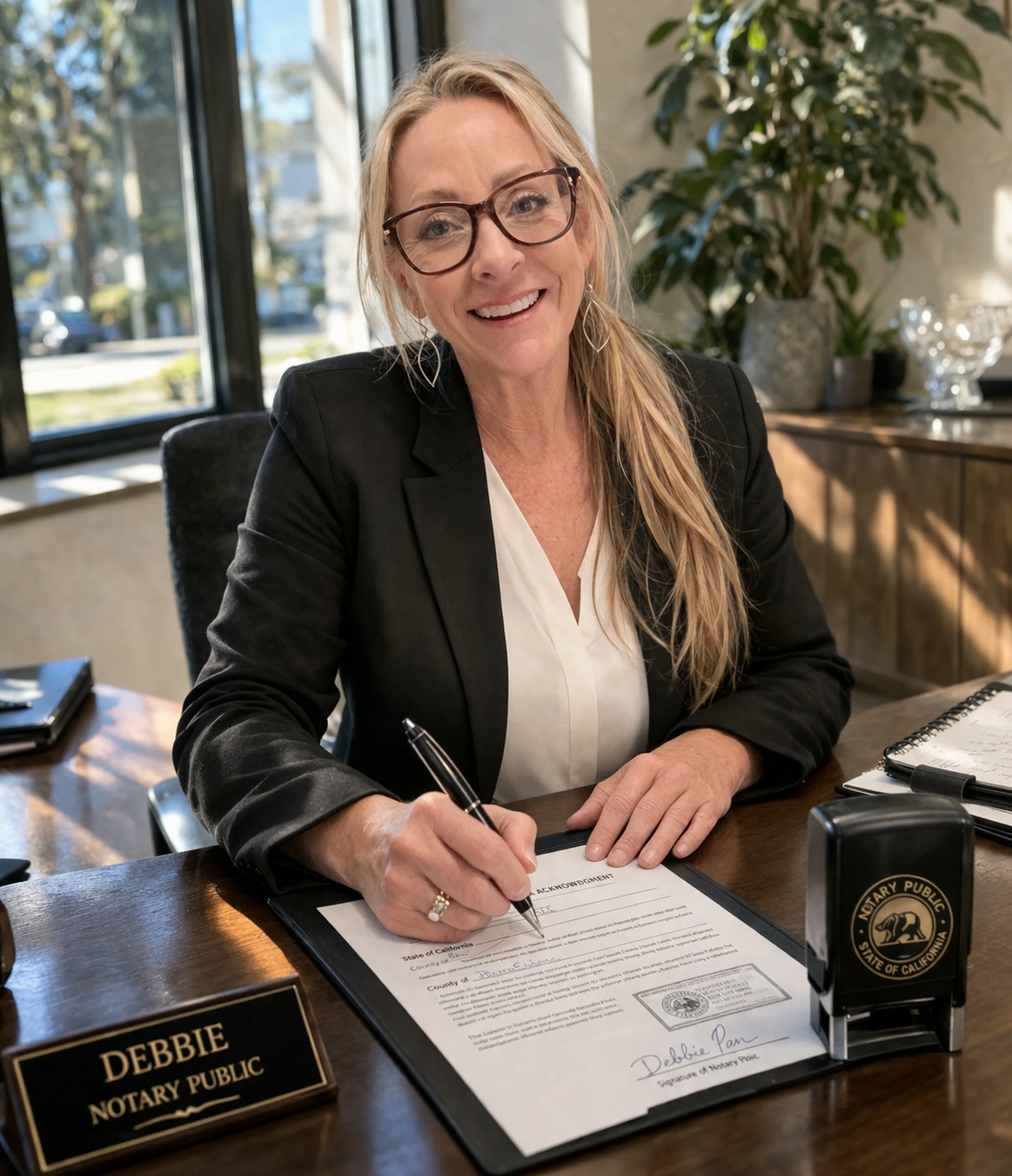
Deborah Cuha
Licensed Utah Notary Public (Commission #742886) with 30+ years of experience. NNA Certified Loan Signing Agent and Certified Remote Signing Agent. Based in Park City, serving Summit, Wasatch, and Salt Lake counties.
Read Full Bio →