Yes, a notary can and sometimes must refuse to notarize a document when specific legal or procedural requirements are not met.
A Utah notary can refuse notarization and in many situations is legally required to do so when proper conditions are not met.
Key Takeaways
- A notary must refuse if the signer cannot be properly identified
- A notary must refuse if the signer appears coerced or unwilling
- Incomplete or blank documents should not be notarized
- A notary with a financial interest in the transaction must decline
- A notary may refuse for any reasonable cause without legal liability
Having trouble getting a document notarized?
NotaryLTD can help you understand the requirements and prepare your documents properly before your appointment.
Book NowWhen a Notary Must Refuse
Utah law requires a notary to refuse notarization in several specific circumstances where completing the act would be improper or illegal.

The most fundamental requirement for any notarization is proper identification of the signer. If the signer cannot produce a valid, unexpired government-issued photo ID that includes a signature and physical description, the notary must refuse to proceed. Acceptable forms of ID include a state driver's license, state ID card, or U.S. passport. Driving Privilege Cards are specifically excluded under Utah law. If the ID is expired, damaged beyond recognition, or does not match the signer's appearance, the notary is obligated to decline.
A notary must also refuse if the signer does not appear to be acting willingly. Notarization serves as a safeguard against fraud and coercion. If someone accompanies the signer and appears to be pressuring them, or if the signer expresses reluctance, confusion about the document's purpose, or hesitation, the notary should stop the process. This duty of observation is especially important in situations involving elderly signers, hospital signings, or estate planning documents where undue influence is a concern.
Mental capacity is another mandatory consideration. If the signer appears disoriented, unable to understand the nature of the document they are signing, or unable to communicate coherently, the notary should not proceed. Note that the notary is not a medical professional and does not diagnose mental capacity. However, if there are clear signs that the signer does not understand what is happening, the notary has a duty to refuse rather than risk facilitating a fraudulent or coerced transaction.
Incomplete or Blank Documents
A notary should refuse to notarize documents that contain blank spaces or are clearly incomplete.
Blank spaces in a document create opportunities for fraud. Someone could add information after the notarization, making it appear that the signer agreed to terms that were not present when they signed. A notary who notices significant blank spaces, especially in critical areas like amounts, names, property descriptions, or terms, should point this out to the signer and decline to proceed until the document is complete.
Minor blanks, such as a date line that will be filled in by the recording office, are generally acceptable. The standard is whether the blank could be used to alter the substance of the document. If there is any doubt, the notary should err on the side of caution and ask the signer to have the document completed before returning for notarization.
This principle also applies to documents that appear to have been altered. If there are visible whiteout marks, scratched-out text, or other signs of modification, the notary should question whether the document is in its intended final form. The signer should initial any legitimate corrections before the notarization proceeds.
Financial Interest or Conflict of Interest
A notary must refuse to notarize any document in which they have a direct financial or beneficial interest.
As discussed in our guide on notarizing for family members, a notary cannot notarize a document if they are named as a party, beneficiary, grantee, or in any other capacity that gives them a financial stake. This rule exists to maintain the impartiality that is the foundation of the notarial office.
The financial interest prohibition extends beyond obvious situations. If the notary would receive a commission, bonus, or referral fee contingent on the document being signed, they have a financial interest. If the notary owns property that would increase in value as a result of the transaction, they have an indirect financial interest. When in doubt, the notary should decline and refer the signer to another notary.
This rule is separate from the question of notary fees. Charging and receiving the standard notarization fee does not constitute a financial interest in the transaction. The fee is compensation for the notarial service, not a stake in the underlying document or transaction.
Need a notary who follows proper procedures?
NotaryLTD ensures every notarization meets Utah legal requirements. Over 30 years of experience protecting signers and documents.
Book NowSigner Not Personally Present
For traditional notarizations, the signer must be physically present before the notary at the time of signing. For RON, they must appear live on video.
A notary must refuse to notarize a document if the signer is not present. This means the notary cannot notarize a document that someone brings in on behalf of another person who signed it elsewhere. The entire purpose of the notary's involvement is to witness the signing and verify the signer's identity in real time. Pre-signed documents without the signer present cannot be notarized through an acknowledgment, though a jurat requires the signer to sign in the notary's presence.
For RON sessions, the signer must appear live on the audio-video feed throughout the session. A pre-recorded video or a static image is not acceptable. The notary must be able to interact with the signer in real time, observe their demeanor, and verify their identity through the live video connection. If the video feed drops during the session, the notary must pause until the connection is restored.
There is one exception to the physical presence requirement: the use of a credible witness. If a signer cannot produce acceptable identification but is personally known to a credible witness who can vouch for their identity under oath, the notarization may proceed. However, the signer must still be physically present for in-person notarizations or live on video for RON.
Document Type Restrictions
Some documents have specific legal requirements for notarization that the notary must verify before proceeding.
Certain documents must contain specific notarial certificate wording to be valid. If the document lacks a notarial certificate or contains incorrect wording, the notary should not simply attach their seal and hope for the best. The notary should inform the signer that the correct certificate language needs to be added, either by the signer's attorney or by attaching a separate notarial certificate with the appropriate wording.
A notary may refuse to notarize a document they believe to be fraudulent or illegal. If the content of the document appears to describe an illegal act, or if circumstances suggest the document is being used for fraudulent purposes, the notary should decline. The notary does not need to read the entire document to determine its legality, but if red flags are apparent, refusal is the appropriate response.
Foreign language documents present another consideration. A Utah notary is not required to read or understand the content of a document they notarize, since their role is limited to verifying the signer's identity and willingness. However, the notary must be able to communicate with the signer in a common language. If the notary and signer cannot communicate effectively, the notary should refuse, as they cannot assess the signer's willingness and understanding.
Refusal for Any Reasonable Cause
Utah law allows notaries to refuse for any reasonable cause, giving them broad discretion to decline when something does not feel right.
Beyond the mandatory refusal situations, a notary has the right to decline service for any reasonable cause. This includes situations where the notary feels unsafe, where the environment is not conducive to a proper notarization, or where the signer's behavior raises concerns. A notary is not required to explain their reason for refusal in detail, though they should document the refusal in their journal.
However, a notary cannot refuse based on the signer's race, gender, religion, national origin, sexual orientation, or other protected characteristics. Discrimination is never a reasonable cause for refusal. The notary's role is to serve the public impartially, and refusal must always be based on legitimate procedural, legal, or safety concerns.
If you have been refused notarization and are unsure why, or if you want to ensure your documents are properly prepared before your appointment, contact NotaryLTD at 435-565-1333. With over 30 years of experience and NNA Certification, we can help you understand what is needed and get your documents notarized correctly. Our FAQ page also addresses many common questions about document preparation and requirements.
Get your documents notarized right the first time
NotaryLTD at 1090 Center Dr, Suite 23, Park City. In-person $10/act, RON $25/act, mobile with travel fee. 7 days a week.
Book NowFrequently Asked Questions
About the Author
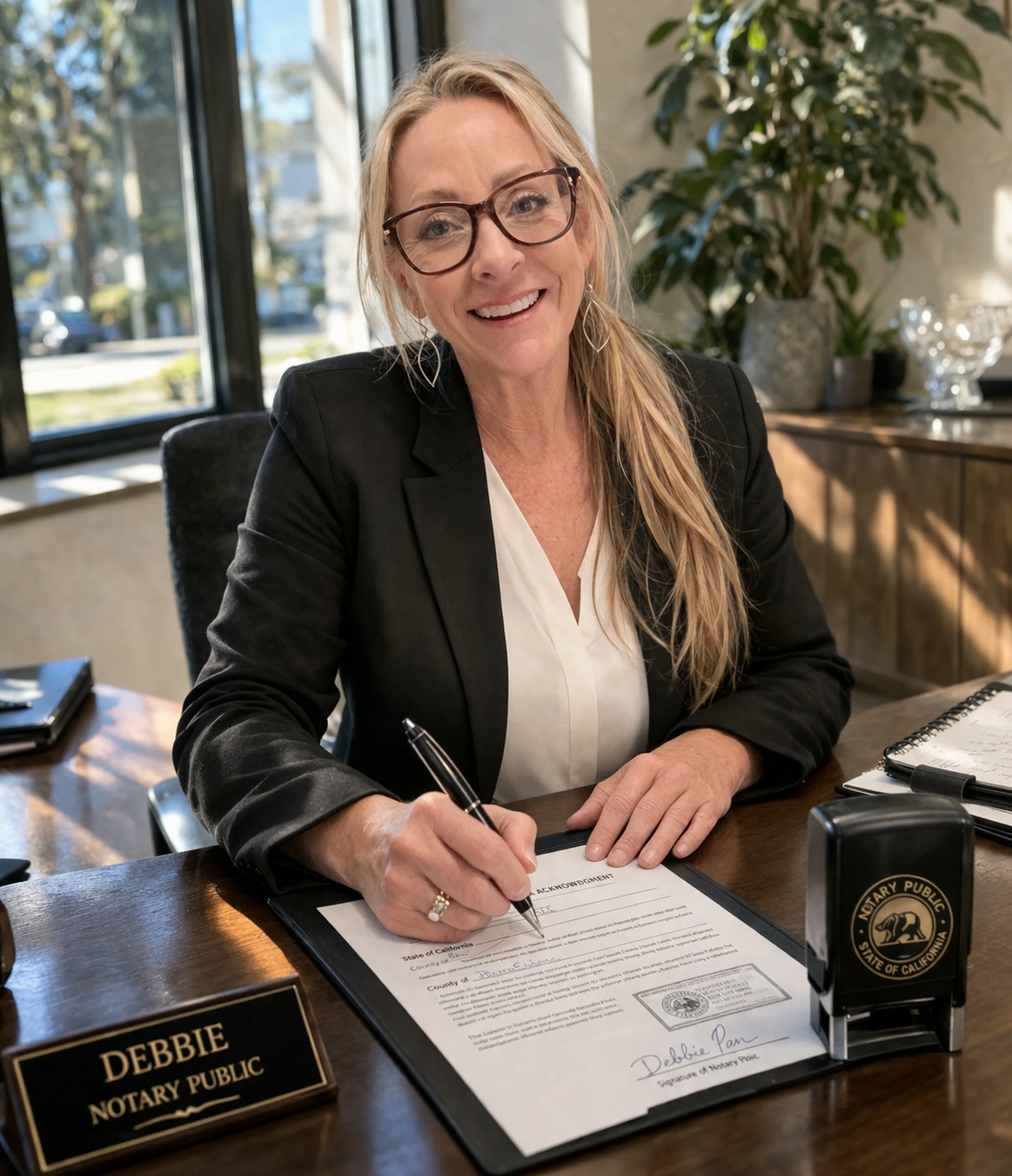
Deborah Cuha
Licensed Utah Notary Public (Commission #742886) with 30+ years of experience. NNA Certified Loan Signing Agent and Certified Remote Signing Agent. Based in Park City, serving Summit, Wasatch, and Salt Lake counties.
Read Full Bio →