Bring a valid government-issued photo ID and your documents to your notary appointment. Leave documents unsigned if they require a jurat.
Bring a valid government photo ID and your complete documents. Leave documents unsigned if they require a jurat. Here is your full checklist.
Key Takeaways
- Bring a valid, unexpired government-issued photo ID with signature and physical description.
- Have your documents complete and printed, with all fields filled in.
- Do NOT sign documents that require a jurat until you are with the notary.
- Bring payment in the agreed-upon form (cash, check, or digital).
- If witnesses are needed, bring them with their own valid IDs.
Need to schedule a notary appointment?
NotaryLTD makes preparation easy. We tell you exactly what to bring when you book.
Book NowIdentification Requirements
Bring a valid, unexpired government photo ID with a signature and physical description. This is the most critical item.

Your identification is the single most important thing to bring to a notary appointment. Without proper ID, the notarization cannot proceed. Utah law requires a government-issued identification document that includes three elements: a clear photograph of you, a signature specimen for comparison, and a physical description such as date of birth, height, weight, or eye color.
The most commonly accepted IDs are a Utah driver license, an out-of-state driver license, a US passport or passport card, a state-issued identification card, or a military ID with photo. All must be current and unexpired. An expired ID, even one that expired recently, may not be accepted.
Remember that Utah Driving Privilege Cards are not accepted for notarization purposes. If this is your only form of identification, you will need an alternative such as a passport, consular ID, or a credible witness. Read our detailed guide on accepted identification for more information.
A practical tip: check your ID the day before your appointment. Verify it is not expired, the photo is recognizable, and the card is not damaged in a way that makes information unreadable. If you discover an issue, you have time to address it before the appointment.
Document Preparation
Have your documents printed, complete, and organized. All fields should be filled in before the appointment.
Your documents should arrive at the notary appointment in a ready-to-notarize state. This means all fields, blanks, and required information should be filled in. A notary cannot notarize a document with critical blank spaces because that creates an opportunity for someone to fill in information after the notarization, which undermines the integrity of the process.
If your documents were sent to you electronically, print them before the appointment. Make sure all pages printed correctly, especially any pages with signature lines, notarial certificate language, or exhibits. Missing pages require reprinting, which can delay or derail the appointment.
Check whether your documents require a jurat or an acknowledgment by reading the notarial certificate language, usually found at the end of the document or on a separate attached page. If it says "subscribed and sworn before me," it requires a jurat and you must NOT sign before the appointment. If it says "acknowledged before me," it requires an acknowledgment and you may pre-sign.
Organize multiple documents in the order you want them notarized. Use paper clips or tabs to mark signature pages. Remove any pages that do not require notarization to keep the stack manageable. The more organized your documents are, the faster and smoother your appointment will be. Visit our mobile notary page for more tips.
Payment Preparation
Confirm the total fee and accepted payment methods before your appointment so you arrive with the right form of payment.
When you book your appointment with NotaryLTD, we provide a complete fee estimate including per-act charges and any travel fees. Bring payment in the agreed-upon form. We accept cash, personal checks, and common digital payment methods. Confirm which methods your specific notary accepts when you schedule.
The total fee depends on the number of notarial acts and whether travel is involved. For in-person office visits, you pay up to $10 per act with no travel fee. For mobile visits, add the travel fee calculated at $0.70 per mile round-trip. For RON sessions, the fee is up to $25 per act with no travel. See our complete pricing information for details.
Having exact payment ready speeds up the conclusion of your appointment. If paying cash, bring small bills so the notary does not need to make change. If paying digitally, have the app open and ready on your phone. Small efficiencies like these contribute to a smooth experience for everyone.
Need to know the exact cost before your appointment?
Call 435-565-1333 for a free quote. We break down every fee so there are no surprises.
Book NowWitnesses and Additional Signers
If your document requires witnesses or co-signers, make sure they attend with their own valid identification.
Some documents require witnesses in addition to notarization. Wills, certain estate planning documents, and some contracts specify that one or two witnesses must observe the signing. If your document requires witnesses, they must attend the appointment in person and may need to present their own identification.
Additional signers, such as a spouse co-signing a deed or both parties to a contract, must each present their own valid ID. The notary verifies each signer's identity independently. All signers must be present at the same time unless separate appointments are specifically arranged.
If you need a credible witness to substitute for standard identification, that person must also attend with their own valid ID. The credible witness takes an oath before the notary, so they need to be physically present throughout the process. Let us know when you book your appointment if a credible witness will be involved.
Coordinate with all parties before the appointment to ensure everyone can attend at the scheduled time with their required documents. A single no-show can derail a multi-signer appointment.
What Not to Bring and Common Mistakes
Do not bring expired IDs, unsigned jurat documents that are already signed, or incomplete documents with blank fields.
Knowing what not to bring is equally important. Do not bring expired identification. Even if it expired last week, some notaries will not accept it. Get a renewal before your appointment if your ID is expired or about to expire.
Do not bring documents that you have already signed if they require a jurat. Check the notarial certificate language. If you signed a jurat document prematurely, you may need to obtain a new unsigned copy, which delays the process and may require coordination with the attorney or institution that prepared the document.
Do not bring incomplete documents with blank required fields. The notary may refuse to notarize documents with significant blank spaces. Fill in all required information before the appointment, or at minimum, discuss with the notary which fields can remain blank.
Do not bring documents in pencil. All notarized documents should be in ink, typically blue or black. The notary's seal is applied in purple ink per Utah requirements. Pencil signatures or entries can be erased and altered, which defeats the purpose of notarization.
Finally, do not bring a Utah Driving Privilege Card as your sole form of identification. As discussed in our FAQ, it is not accepted for notarization in Utah. Bring a passport, state ID, or another qualifying document instead.
Complete Notary Appointment Checklist
Use this checklist to ensure you have everything you need for a smooth and efficient notary appointment.
- Valid, unexpired government-issued photo ID (driver license, passport, state ID, or military ID)
- All documents to be notarized, printed and complete with all fields filled in
- Documents unsigned if they require a jurat (check notarial certificate language)
- Documents signed if they require only an acknowledgment (optional to pre-sign)
- Witnesses with their own valid IDs if the document requires witnesses
- Credible witness with their valid ID if you lack standard identification
- Additional signers with their valid IDs if the document has co-signers
- Payment in the agreed-upon form (cash, check, or digital)
- A pen with blue or black ink (optional, notary will have pens)
- Any supporting documents referenced in the notarized documents
Print this checklist and review it the day before your appointment. If anything is missing, you have time to address it. NotaryLTD is available at 435-565-1333 to answer any preparation questions.
Ready to book your notary appointment?
We will send you a personalized preparation checklist when you schedule. Open 7 days a week.
Book NowFrequently Asked Questions
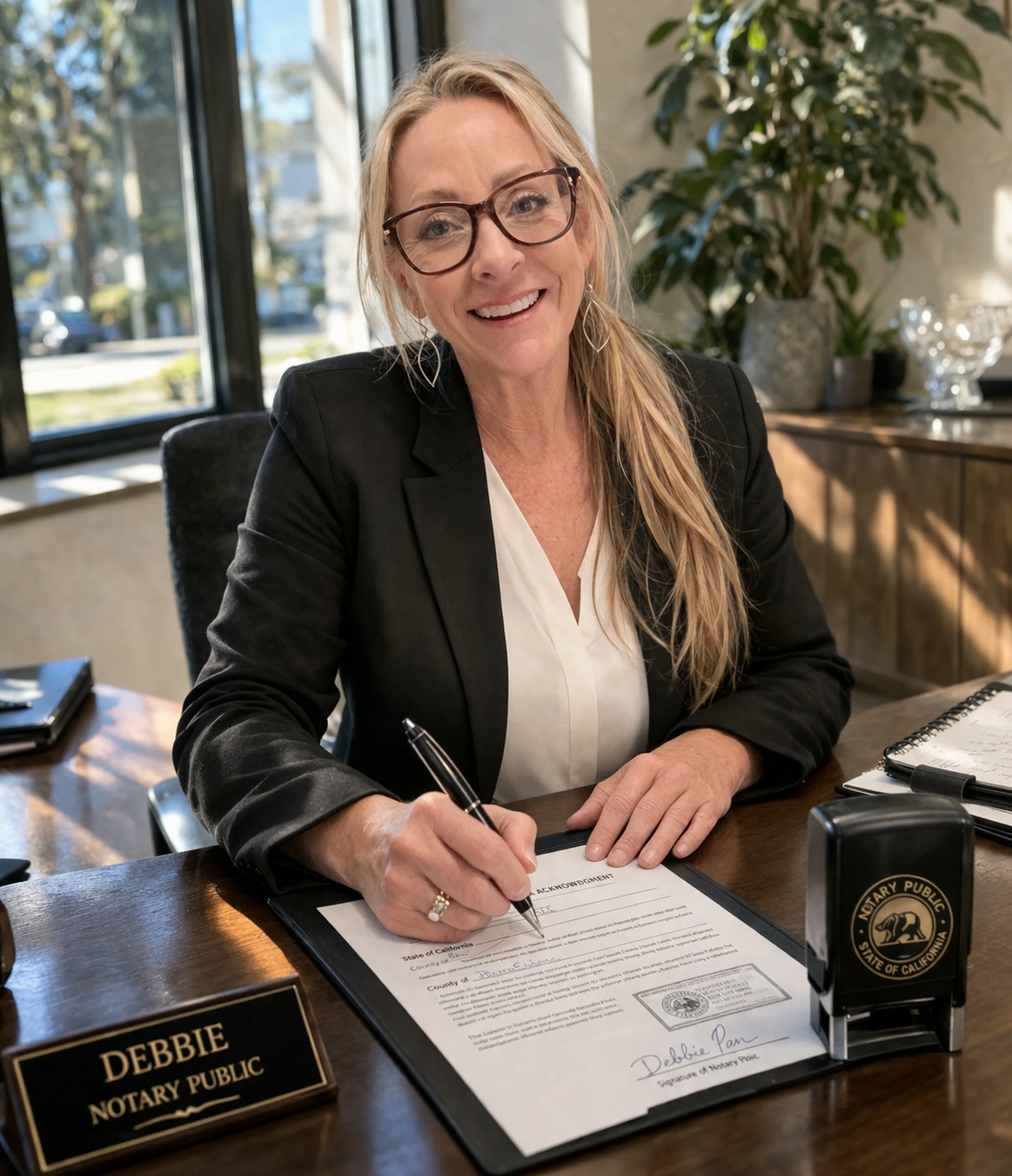
About the Author
Deborah Cuha
Licensed Utah Notary Public (Commission #742886) with 30+ years of experience. NNA Certified Loan Signing Agent and Certified Remote Signing Agent. Based in Park City, serving Summit, Wasatch, and Salt Lake counties.
Read Full Bio →