An apostille is an international certification that authenticates a document for use in another country that is a member of the Hague Apostille Convention.
An apostille is an official certificate that authenticates a document's signature and seal for international use under the Hague Convention.
Key Takeaways
- An apostille verifies a document's authenticity for use in Hague Convention member countries
- In Utah, the Lieutenant Governor's office issues apostilles
- Common documents needing apostilles include birth certificates, court orders, and business documents
- Many documents require notarization before an apostille can be issued
- NotaryLTD can help prepare your documents for the apostille process
Need a document notarized for apostille?
NotaryLTD ensures your documents meet all requirements before you apply for an apostille. Available 7 days a week.
Book NotarizationUnderstanding Apostilles
An apostille is a standardized certificate attached to a document that verifies the authenticity of the signature and seal of the official who signed or notarized it.

The apostille system was established by the Hague Convention of 1961 to simplify the process of authenticating documents for international use. Before the apostille system, getting a document recognized in another country required a cumbersome chain of certifications from multiple government offices. The apostille replaced this with a single, standardized certificate that is recognized by all member countries.
The apostille does not verify the content of your document. It only confirms that the signature on the document (typically a notary's or government official's signature) is genuine, that the person who signed it held the authority to do so, and that any seal or stamp on the document is authentic. The receiving country then accepts the document based on this authentication.
As of 2024, over 120 countries are members of the Hague Apostille Convention. If you need to use a document in a member country, an apostille is typically sufficient for authentication. If the destination country is not a member, you may need a different form of authentication called an "authentication and legalization" or "embassy legalization," which involves additional steps through the U.S. Department of State and the foreign country's embassy or consulate.
In Utah, apostilles are issued by the Lieutenant Governor's office. The process involves submitting your document (which must first be properly notarized or carry an official government signature) along with the required application form and fee. NotaryLTD can help you prepare your documents by providing the notarization step that precedes the apostille application.
When You Need an Apostille
You need an apostille when a foreign government, institution, or business in a Hague Convention country requires proof that your U.S. document is authentic.
The most common situations requiring apostilles include international adoption proceedings, where foreign courts need authenticated birth certificates, background checks, and home studies. Marriage abroad often requires apostilled birth certificates and single-status affidavits. Business expansion into foreign markets may require apostilled corporate documents such as articles of incorporation, certificates of good standing, and powers of attorney.
Education-related documents frequently need apostilles. If you are studying abroad or having foreign credentials evaluated, your transcripts, diplomas, and academic records may need apostille authentication. Similarly, professional licenses and certifications often require apostilles when you plan to practice in another country.
Real estate purchases in foreign countries typically require apostilled identification documents, powers of attorney, and financial statements. Immigration applications may need apostilled police clearances, birth certificates, and marriage certificates.
If you are unsure whether your specific situation requires an apostille, contact the foreign institution or government office that is requesting the document. They can confirm whether an apostille is required and whether any additional authentication steps are necessary.
Apostille vs. Notarization
Notarization and apostilles serve different purposes: notarization verifies the signer's identity, while an apostille authenticates the notary's authority for international acceptance.
Notarization is the act of a commissioned notary public verifying a signer's identity, witnessing their signature, and applying their official seal. This process is domestic in nature and is recognized within the United States. When you get a document notarized, the notary's seal and signature give the document additional legal standing for use within the country.
An apostille goes one step further. It authenticates the notary's commission and signature for international recognition. Think of it as a second layer of verification: the notary verified you, and the apostille verifies the notary. This chain of authentication gives the foreign country confidence that the document is legitimate.
In many cases, notarization is a prerequisite for obtaining an apostille. Private documents (such as personal affidavits, powers of attorney, and consent letters) typically must be notarized first, and then the notarized document is submitted for an apostille. Public documents (such as birth certificates issued by a state vital records office) already carry an official government signature and may not need additional notarization before the apostille is applied.
NotaryLTD provides the notarization step that precedes the apostille process. Once your document is properly notarized with our commission #742886, you can submit it to the Utah Lieutenant Governor's office for apostille issuance.
Documents Commonly Needing Apostilles
Birth certificates, marriage certificates, court orders, powers of attorney, corporate documents, and academic records are among the most frequently apostilled documents.
Vital records including birth certificates, death certificates, and marriage certificates are the most commonly apostilled documents. In Utah, these are issued by the Utah Department of Health and carry the registrar's official signature, which qualifies them for direct apostille application without additional notarization.
Court documents including divorce decrees, custody orders, and judgments carry the court clerk's signature and seal. These can be submitted directly for apostille through the appropriate state office. Federal court documents require apostille from the U.S. Department of State rather than the state office.
Powers of attorney for international use are frequently apostilled, particularly when someone needs to act on your behalf in a foreign country for real estate transactions, business matters, or legal proceedings. These must be notarized before seeking an apostille.
Business documents including articles of incorporation, certificates of good standing, board resolutions, and corporate bylaws often need apostilles when a U.S. company conducts business internationally. Background checks, FBI clearances, and police reports used for immigration or employment abroad also commonly require apostilles.
Academic documents like diplomas, transcripts, and professional certifications need apostilles for educational institutions and licensing bodies in foreign countries. The specific requirements depend on the receiving country and institution.
Preparing documents for apostille?
We provide the notarization step before your apostille application. 30+ years experience with international documents.
Get StartedThe Utah Apostille Process
In Utah, apostilles are issued by the Lieutenant Governor's office after you submit your properly notarized or officially signed document with the required application.
The basic process involves several steps. First, ensure your document is ready for apostille submission. If it is a private document (not issued by a government office), it must be notarized by a Utah notary public. The notary's commission must be current and in good standing with the state. If it is a government-issued document, it must carry the original signature of the issuing official.
Second, complete the apostille application form available from the Utah Lieutenant Governor's office. The form asks for information about the document, the destination country, and your contact details. Submit the original document (not a copy), the completed application, and the required fee.
Third, the Lieutenant Governor's office verifies the notary's commission or the government official's authority, then attaches the apostille certificate to your document. The apostille is a standardized form with specific fields that identify the country, the signer, their capacity, the seal, the date, and the issuing authority.
Processing times vary but typically take 3 to 10 business days for standard processing. Expedited options may be available for an additional fee. Once issued, the apostille is permanently attached to your document and is valid indefinitely, though the receiving country may have its own requirements about how recent the underlying document must be.
How NotaryLTD Helps With Apostille Preparation
NotaryLTD provides the notarization that many documents require before apostille application, ensuring your documents meet all Utah requirements.
While NotaryLTD does not issue apostilles (that authority belongs to the Lieutenant Governor), we provide the essential notarization step that precedes the apostille for many document types. Our experienced notary understands the specific requirements for documents destined for international use and ensures that every notarial act is performed correctly.
We handle affidavits, powers of attorney, consent letters, corporate documents, and other private documents that need notarization before apostille. We also notarize copies of documents when the original cannot be submitted, a common requirement for passports and other identification documents needed for international use.
Our office is located at 1090 Center Dr, Suite 23, Park City, UT 84098. We serve the entire Park City area, Summit County, and surrounding regions. Call us at 435-565-1333 or visit our contact page to schedule your notarization for apostille preparation.
International document needs?
NotaryLTD ensures your documents are properly notarized and ready for apostille submission. Open 7 days a week.
Book NotarizationFrequently Asked Questions
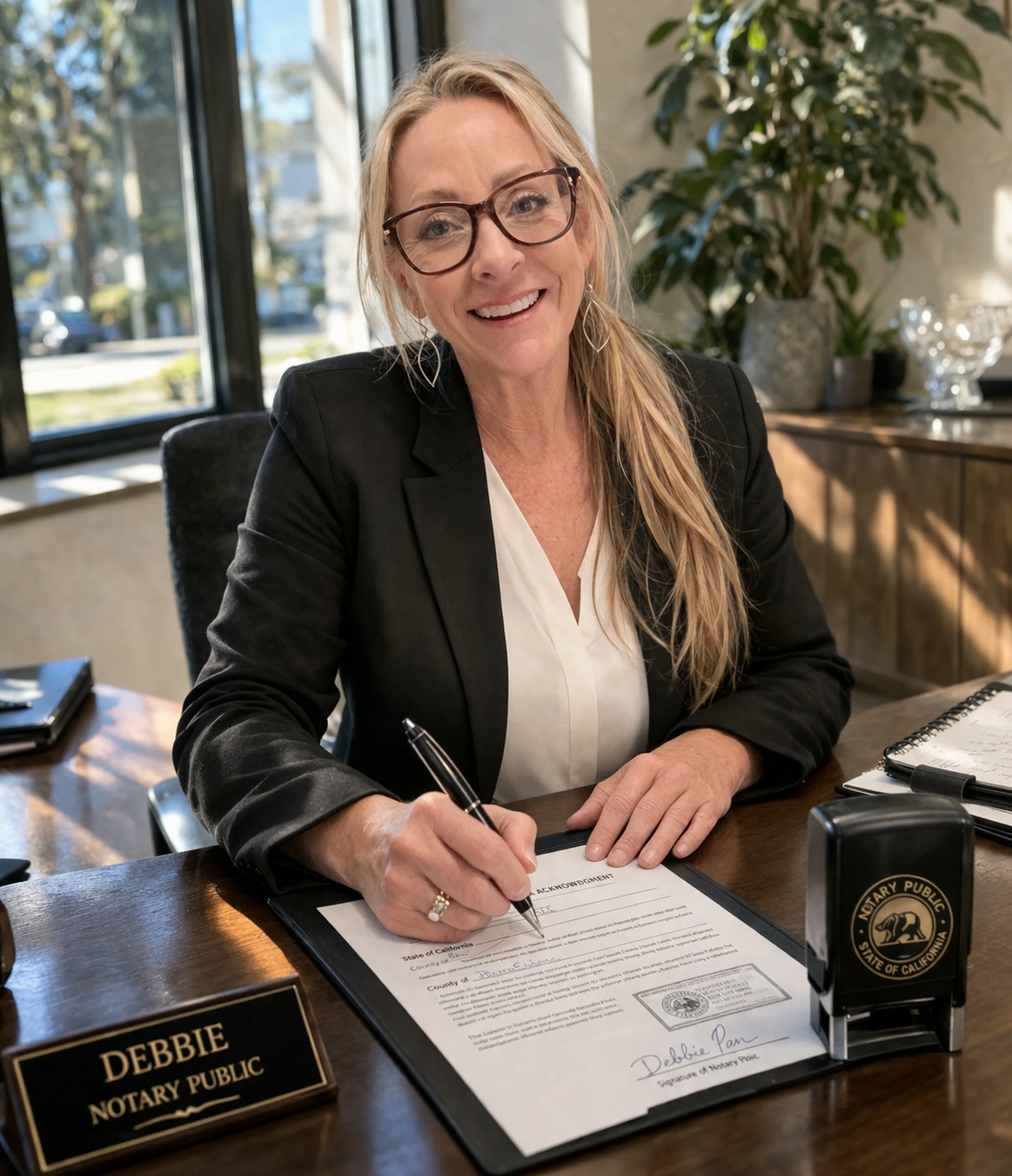
About the Author
Deborah Cuha
Licensed Utah Notary Public (Commission #742886) with 30+ years of experience. NNA Certified Loan Signing Agent and Certified Remote Signing Agent. Based in Park City, serving Summit, Wasatch, and Salt Lake counties.
Read Full Bio →